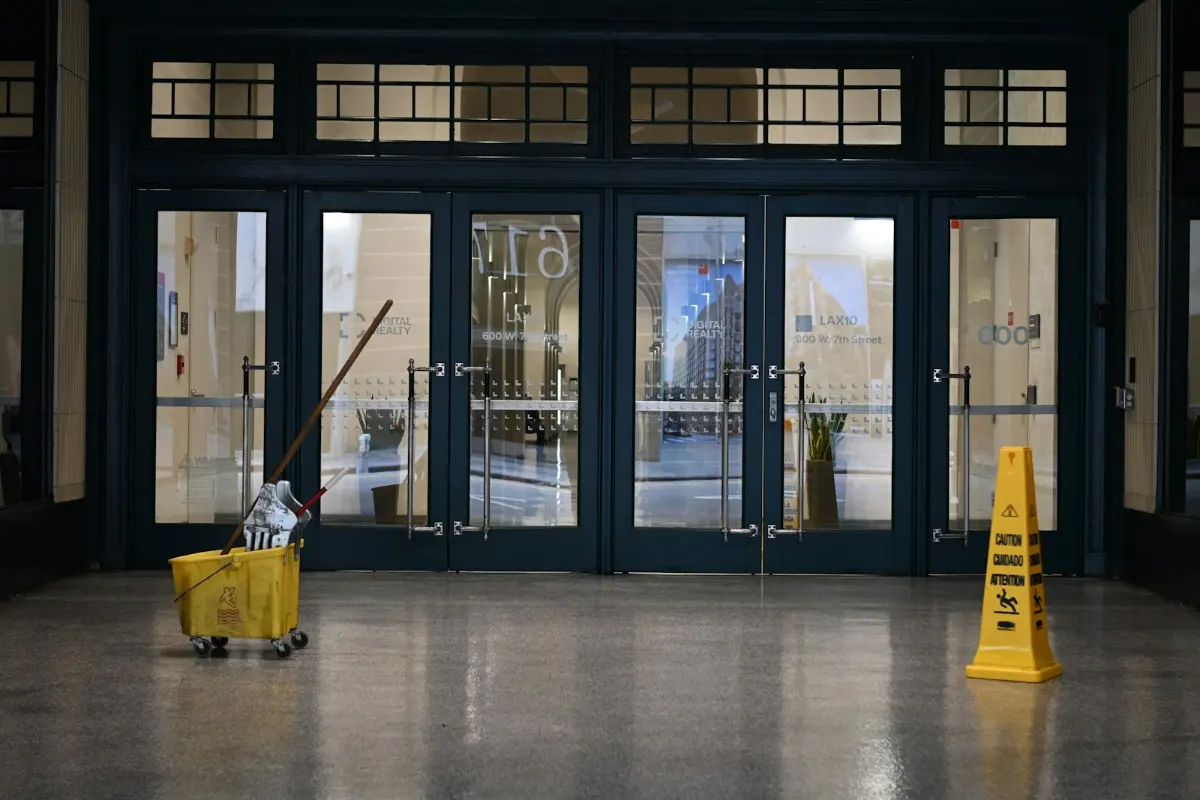
Your building gets cleaned every night.
So why does the lobby look rough by two in the afternoon, and why is the downstairs restroom out of paper towels before lunch?
This is the gap nightly cleaning cannot close. A crew that leaves at nine in the evening has no way to deal with what happens between eight in the morning and five at night, which in a busy building is most of what people actually see.
Nightly janitorial decides what your building looks like at seven in the morning. A day porter decides what it looks like when your customers are standing in it.
Here is the difference between the two, and how to tell which one your building needs.
1. What Nightly Janitorial Actually Covers
This is the service most buildings have, and for good reason. It is efficient, it happens when the building is empty, and it resets everything before the next day.
A typical nightly visit covers:
- Trash removal throughout the building
- Restrooms cleaned, disinfected and restocked
- Breakroom and kitchen cleaned
- High-touch surfaces disinfected
- Floors vacuumed or mopped
- Glass spot cleaned
- Dusting and detail work on a rotation
The strength of nightly service is depth. Nobody is working around people, so the crew can move furniture, run equipment and do the kind of work that would be disruptive during business hours.
The limit is timing. Everything it fixes stays fixed only until your building fills up again.
2. What a Day Porter Actually Does
A day porter works during business hours, usually on a set schedule, and keeps the building presentable while it is being used.
Typical day porter work:
- Restroom checks and restocking through the day
- Lobby and entry touch-ups, including glass and floors
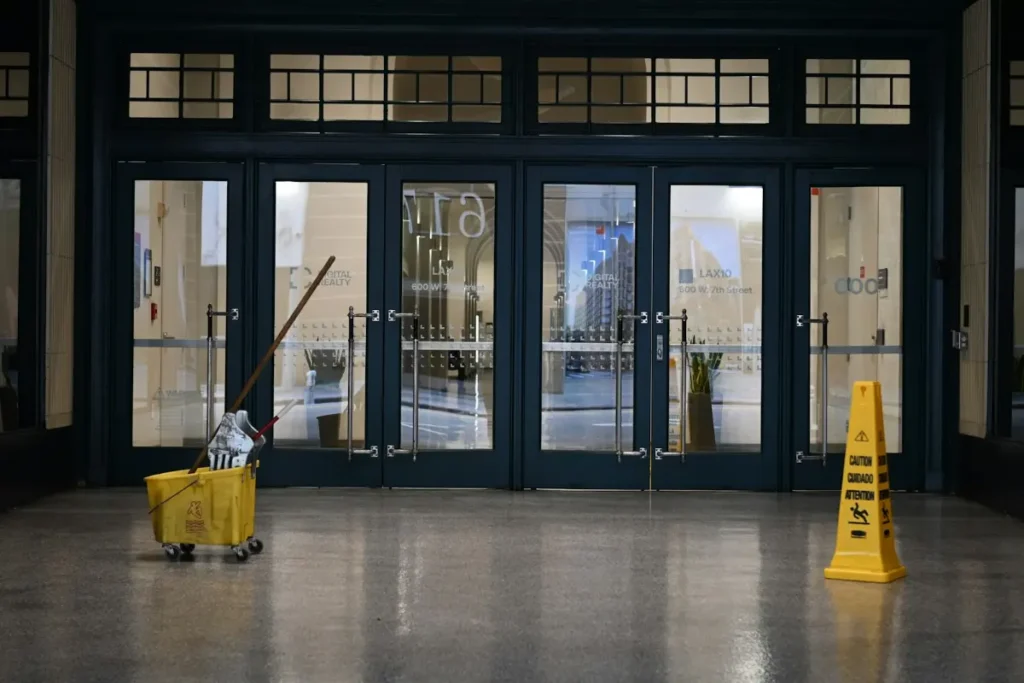
- Spill response and wet floor signage
- Breakroom reset after the lunch rush
- Trash in high-traffic areas before it overflows
- Conference room turnover between meetings
- Entry mats and floors during snow or rain
- Light touch-ups ahead of a visit from a customer or inspector
The strength of day porter coverage is response. Somebody is in the building when the problem happens, which means the problem lasts minutes rather than hours.
The limit is depth. A porter working around occupied desks and busy restrooms cannot do the heavy work, so in most buildings a porter supplements nightly service rather than replacing it.
3. The Simplest Way to Tell Which You Need
Ask yourself one question: does my building generate problems faster than once a day?
Signs that nightly service alone is fine:
- Your restrooms still look reasonable at four in the afternoon
- Supplies last the full day without anyone checking
- Few outside visitors come through
- Foot traffic is steady rather than heavy
- Complaints are rare and specific rather than constant
Signs you need daytime coverage:
- Restrooms run out of supplies before closing
- Your lobby looks tired by midday
- Customers, patients or members are in the building all day
- Staff are the ones mopping spills or restocking paper
- Winter weather regularly leaves your entry wet and slick
- You have events, tours or inspections you have to prepare for
That fourth one is worth pausing on. In a lot of buildings, day porter work is already happening, it is just being done by employees who were hired for something else.
4. Buildings Where a Day Porter Usually Pays for Itself
Not every facility needs one. These tend to:
- Medical and dental offices, where waiting rooms and restrooms turn over all day. We covered the standards in what a clinic should expect from a cleaning company.
- Fitness centers and gyms, where equipment and locker rooms are in constant use
- Schools and daycares, with restrooms, cafeterias and spills during the day
- Auto dealerships and showrooms, where customers judge the space while they wait
- Multi-tenant office buildings, where common areas belong to everyone and nobody
- Banks, clinics and public-facing offices with steady walk-in traffic
- Manufacturing and warehouse facilities with shift changes and busy breakrooms
5. The Costs People Forget to Compare
A day porter is an added cost, and it should be weighed honestly. But the comparison is rarely porter against nothing.
Consider what the alternative is costing already:
- Staff time spent restocking, wiping and tidying instead of doing their jobs
- The slip risk of a wet entry nobody is watching during a snowstorm
- Customers forming an impression of your business from a tired lobby
- Your own time fielding complaints and chasing the cleaning company
- Accelerated wear on floors when grit sits on them all day
Day porter coverage also scales. Many buildings start with a few hours a day, or coverage only during their busiest stretch, rather than a full shift.
6. Middle Options Worth Asking About
It is not a binary choice. Common arrangements include:
- Split shifts, such as a morning restroom and lobby check plus the full nightly clean
- Peak-hours coverage, a few hours around the busiest part of your day
- Seasonal porter service, during winter weather or your busy quarter
- Event-based coverage, for open houses, inspections and tours
- On-call response, where someone can be there within a set window when something happens
If your building has one predictable crunch, say a lunch rush or a mid-afternoon wave of appointments, targeted coverage usually beats a full shift.

So, Which Does Your Building Need?
A quick way to land on an answer.
Nightly janitorial alone is probably right when:
Your building is mostly staff, traffic is moderate, supplies last the day and the morning reset holds up until closing.
Nightly plus limited daytime coverage is probably right when:
You have public visitors, busy restrooms, a lobby that matters, or winter weather coming through the front door.
Nightly plus a full day porter is probably right when:
Your building runs long hours with heavy traffic, has multiple tenants or public areas, and someone on your staff is currently doing porter work in addition to their real job.
It is time to revisit either way when:
You are hearing the same complaints repeatedly, or your building has grown busier while the cleaning plan has stayed the same. That is also a good moment to re-check how often your building should be cleaned.
Questions to Ask Before You Add Daytime Coverage
- What hours would the porter be on site, and doing what?
- Is the porter dedicated to our building or shared across several?
- What does the porter handle versus the nightly crew?
- Can we start with a few hours a day and adjust?
- Who supervises the porter and checks the work?
- What happens when the porter is out?
- Can coverage shift during winter or our busy season?
- Will adding a porter reduce anything in the nightly scope, and should it?
That last question matters. If daytime coverage is added, some nightly tasks may reasonably move to the day, and your plan should reflect that rather than simply costing more.
Not Sure Which Fits Your Building?
At Club Clean, we build the schedule around how your building is actually used, which sometimes means a full day porter, often means a couple of targeted hours, and sometimes means your nightly service is already the right answer.
We would rather tell you that than sell you coverage you do not need.
If you run a facility in Michigan City, Valparaiso or La Porte, we will walk the building with you, look at your traffic through the day, and show you what we would recommend.
Request a free commercial cleaning quote from Club Clean today.