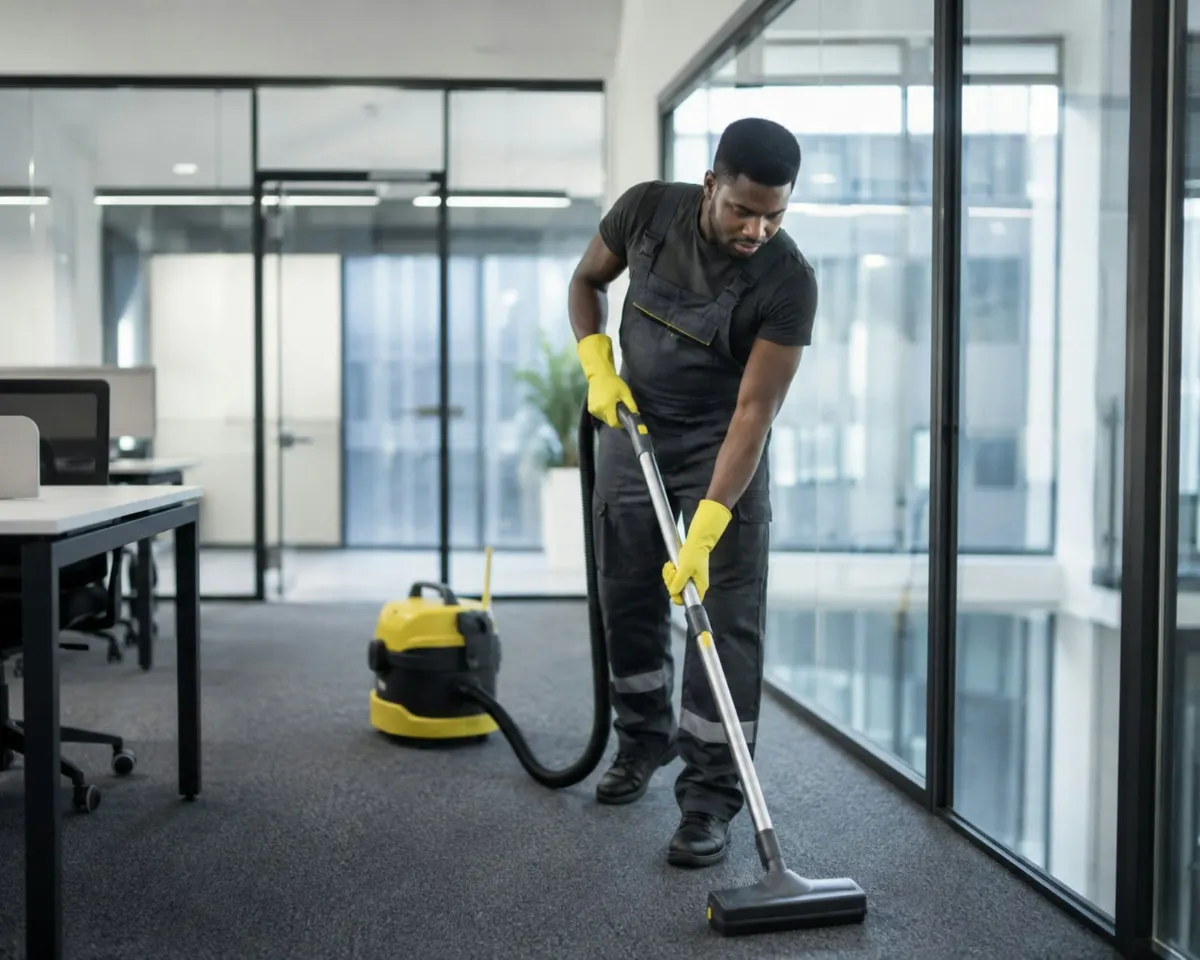
How often should your office be cleaned? It’s one of the first questions business owners and facility managers ask when they start looking at commercial cleaning.
It’s also one of the hardest to answer with a single number.
Some buildings need a cleaning crew every night.
Some do just fine with two or three visits a week.
And some are paying for nightly service they don’t really need—while the restrooms still look rough by 2 p.m.
The right answer isn’t really about the calendar.
It’s about how your building gets used.
What happens inside your building between one cleaning and the next?
That’s what your cleaning schedule should be built around.
Here are six factors that decide how often your office should be cleaned—and how to tell whether your current schedule actually fits your building.
1. How Many People Use Your Building Every Day
This is the biggest factor, and it’s the one a lot of cleaning schedules get wrong.
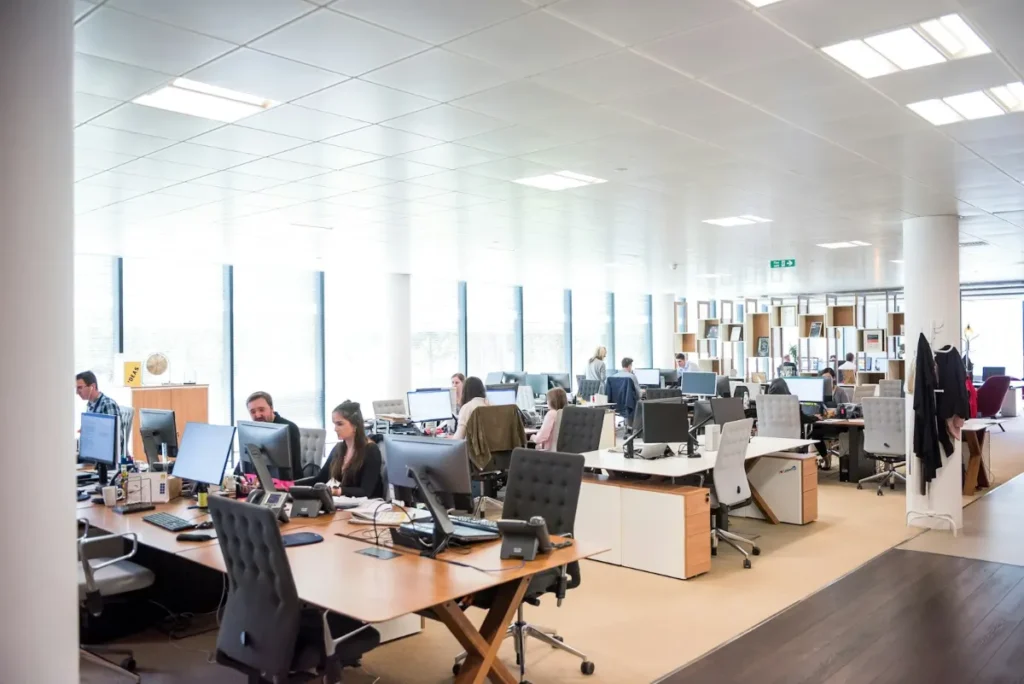
A 4,000-square-foot office with eight employees and a 4,000-square-foot office with 60 employees are not the same building.
Same size.
Completely different cleaning needs.
More people means more of everything:
- Trash and recycling
- Restroom use
- Fingerprints on doors, glass and handles
- Dirt tracked across the floors
- Crumbs, spills and dirty dishes in the breakroom
- Germs on shared surfaces like light switches, keyboards and copiers
As a general rule, the more people who come through your doors each day, the more often your building needs attention.
A small office with a handful of employees might stay in good shape with cleaning two or three times a week.
A busy office with a full staff every day usually needs service five nights a week.
A facility running multiple shifts may need cleaning more than once a day.
If your team has grown since you first set up your cleaning schedule, your schedule probably needs to grow with it.
2. Who Walks Through Your Doors
Your employees might put up with a dusty ledge.
Your customers will notice it.
If clients, patients, students or members of the public come into your building, the standard goes up.
Think about the areas a visitor sees first:
- Entryways and front doors
- Lobbies and waiting areas
- Reception desks
- Public restrooms
- Conference rooms
- Showrooms
These spaces create a first impression before anyone says a word.
A back-office operation with no outside visitors might be able to space out certain tasks.
A customer-facing business—like a medical office, car dealership, bank or fitness center—usually needs those front-of-house areas cleaned daily, even if the rest of the building is on a lighter schedule.
If a customer walked in five minutes before your cleaners arrived, what would they see?
That’s the version of your building people actually judge.
3. Your Restrooms and Breakrooms Set the Pace
Most offices don’t get dirty evenly.
Private offices and storage rooms can go days without much change.
Restrooms and breakrooms can look rough by the end of a single day.
These are the rooms employees complain about.
They’re also the rooms where hygiene matters most.
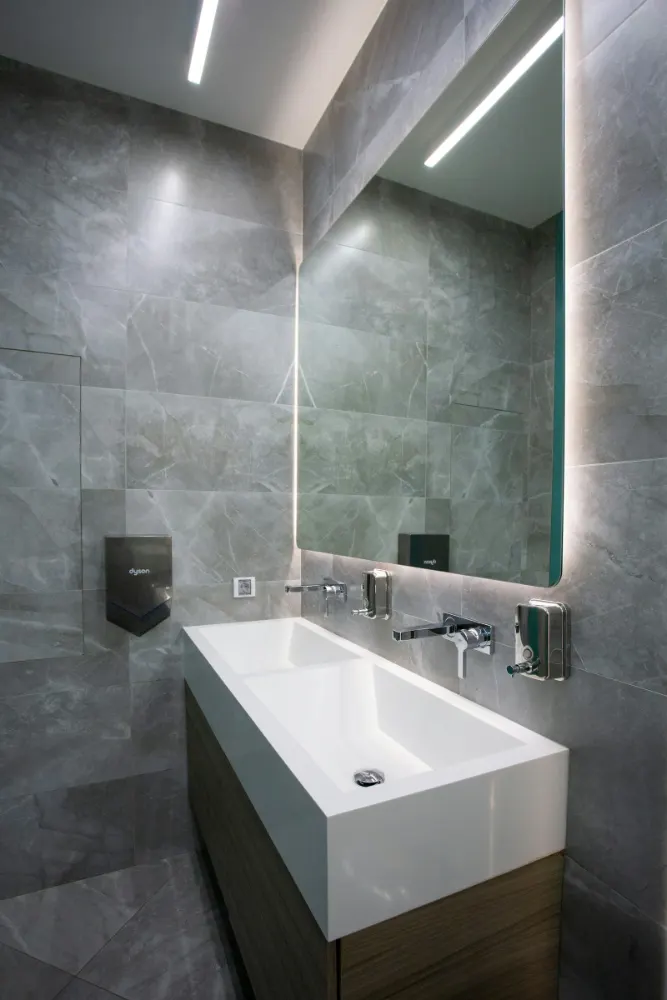
In most commercial buildings, restrooms should be cleaned and restocked every day the building is in use. That usually includes:
- Cleaning and disinfecting toilets, urinals and sinks
- Wiping down mirrors, partitions and fixtures
- Emptying trash and sanitary bins
- Refilling soap, paper towels and toilet paper
- Mopping floors
Breakrooms and kitchens usually need similar daily attention—counters, tables, sinks, microwaves, refrigerator handles, trash and floors.
If your restrooms keep running out of paper towels or looking dirty well before the next scheduled cleaning, that’s a strong sign your building needs more frequent service—or at least a midday touch-up.
4. What Kind of Facility You Run
Different buildings come with different expectations.
Here’s a general look at how cleaning frequency tends to vary by facility type:
- Busy offices: Usually five nights a week
- Small or low-traffic offices: Often two to three times a week
- Medical and dental offices: Daily, with a strong focus on disinfecting exam rooms, waiting areas and restrooms
- Schools and daycares: Daily while students are in the building
- Fitness centers and gyms: Daily—sometimes more than once a day
- Auto dealerships and showrooms: Daily for customer-facing areas
- Warehouses and manufacturing facilities: Based on shift schedules, with offices, restrooms and breakrooms typically cleaned daily and production areas on their own plan
These are starting points, not rules.
A medical office with two exam rooms and a medical office with 20 exam rooms are going to look very different on paper.
Some facilities also have health, safety or industry requirements to meet. In those cases, your cleaning schedule isn’t just about appearance. It’s about protecting people and staying compliant.
That’s one reason it’s worth working with a cleaning company that follows recognized industry training and safety standards, like those promoted by the ISSA (the worldwide cleaning industry association).
If you’re not sure what should be included on each visit, here’s a breakdown of what tasks commercial cleaning typically covers.

5. Northern Indiana Weather Walks Right Into Your Building
If your business is anywhere near Lake Michigan, you already know what winter does to your floors.
Snow.
Slush.
Rock salt.
Mud.
And every bit of it gets tracked straight through your front door.
Salt residue can leave a white film on hard floors, dull the finish over time and work its way deep into carpet and entrance mats. Wet entryways can also become a slip hazard for employees and visitors.
That means the cleaning schedule that works fine in July might not hold up in January.
During the winter months, many Northern Indiana businesses benefit from:
- More frequent entryway and lobby floor care
- Regular cleaning or replacement of entrance mats
- Extra mopping to remove salt residue
- Closer attention to carpet near doorways
- Additional service after heavy snow days
Spring brings its own version of the problem with rain and mud.
A good cleaning plan should account for the seasons—not treat every month the same.

6. Not Everything Needs to Be Cleaned on the Same Schedule
Here’s where a lot of businesses either overpay or underclean.
They think about cleaning as one big job that happens a certain number of times per week.
But a smart cleaning plan breaks the work into different frequencies.
Every cleaning visit:
Trash removal, restroom cleaning and restocking, breakroom cleaning, spot-cleaning glass, disinfecting high-touch surfaces and vacuuming or mopping high-traffic areas.
Weekly:
Dusting desks and ledges, cleaning interior glass, detailed vacuuming, mopping lower-traffic areas and wiping down cabinets and appliances.
Monthly:
Dusting vents and high surfaces, cleaning baseboards, wiping down doors and door frames and detailing furniture.
Quarterly or a few times a year:
Deep carpet cleaning, hard floor scrubbing and refinishing, window washing and tile and grout cleaning.
When your plan is built this way, the areas that need daily attention get it—and you’re not paying for a deep clean every single night.
That’s how you keep a building consistently clean without spending money on work that doesn’t need to happen yet.

So, How Often Should Your Office Be Cleaned?
It depends on your building—but here’s an easy way to think about it.
Five nights a week probably makes sense when:
You have a full staff in the building every day, customers or patients come through regularly, or your restrooms and breakrooms get heavy use.
Two to three times a week may be enough when:
You have a smaller team, few outside visitors, lighter restroom use and a building that doesn’t get much dirt tracked in.
Once a week usually only works when:
The space is very small, lightly used or only occupied part of the week—and even then, restrooms and trash may need attention between visits.
It’s time to rethink your schedule when:
Trash is overflowing before the cleaners arrive, restrooms regularly run out of supplies, employees are cleaning up after themselves just to keep the building usable, or your business has grown and your cleaning plan hasn’t changed.
A cleaning schedule isn’t something you set once and forget.
Your building changes.
Your schedule should too.
Questions to Ask Before You Set a Cleaning Schedule
Before you sign a cleaning agreement—or renew the one you have—take a few minutes to think through how your building is actually used.
Ask yourself (and your cleaning company):
- How many people are in the building on a typical day?
- Do customers, patients or other visitors come inside?
- Which rooms get dirty the fastest?
- How many restrooms do we have, and how heavily are they used?
- Are there times of day when the building gets especially busy?
- Do we have health, safety or industry requirements to meet?
- Does our building need extra attention during winter?
- Which tasks need to happen every visit, and which can be done weekly, monthly or quarterly?
- Will the cleaning plan be adjusted as our business grows or changes?
Cleaning frequency also has a direct effect on what you’ll pay. If you’re comparing quotes, it helps to understand how commercial cleaning rates are calculated so you can tell whether a price actually reflects the schedule your building needs.
And if your current cleaning company keeps missing things no matter how often they show up, the problem may not be your schedule at all. Here are seven warning signs it may be time to switch commercial cleaning companies.
The goal isn’t to clean as often as possible.
It’s to clean as often as your building actually needs—and to do it right every time.
Not Sure What Cleaning Schedule Your Building Needs?
At Club Clean, we don’t believe in one-size-fits-all cleaning plans.
We walk through your facility, learn how your space is used and build a customized cleaning schedule around your foot traffic, your restrooms, your industry and even the Northern Indiana seasons.
That way, the areas that need daily attention get it, and you’re not paying for work your building doesn’t need.
Whether you run an office in Michigan City, a medical practice in Valparaiso or a warehouse in La Porte, we’d be happy to walk through your building and show you what we’d recommend.
Request a free commercial cleaning quote from Club Clean today.