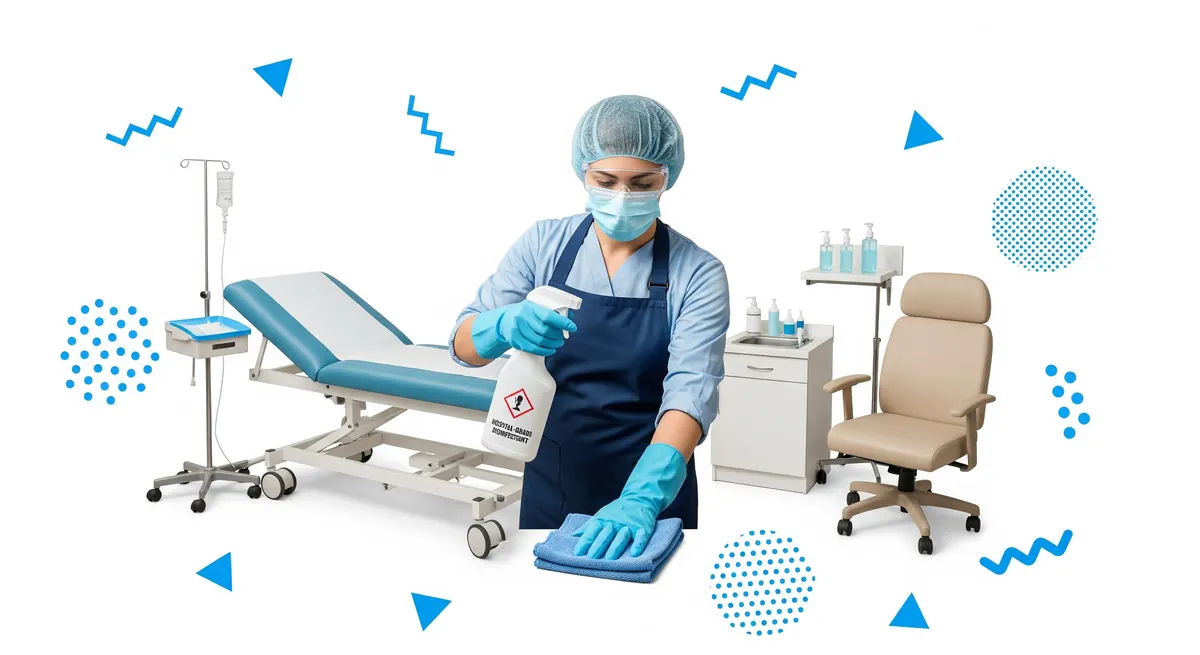
It usually starts with one person.
Someone comes in with a cough because they have a deadline and they do not want to use a sick day.
Two weeks later a third of your staff has been out, your front desk is covered by whoever is available, and nobody can remember who was supposed to call the customer back.
Office germs spread through a short list of surfaces that everyone touches, and most cleaning plans were built for appearance rather than for flu season.
Your building does not need to be spotless to slow this down. It needs the right dozen surfaces cleaned properly, often enough, during the months it matters.
Here is what actually works in a commercial building between November and March, and what to ask your cleaning company for before the season takes hold.
1. Know the Difference Between Clean and Disinfected
These two words get used as if they mean the same thing. They do not.
Cleaning removes dirt and some germs from a surface.
Disinfecting kills what is left behind.
You cannot skip the first step. A disinfectant sprayed onto a dusty keyboard or a sticky breakroom counter mostly reacts with the mess, not with the surface underneath.
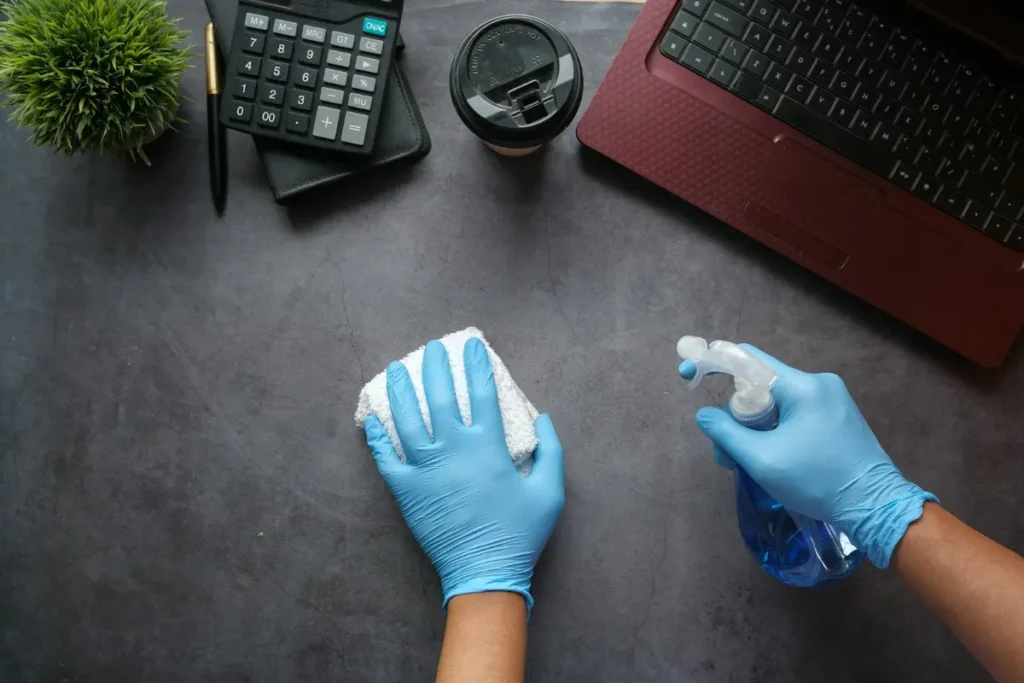
A proper sequence looks like this:
- Clean the surface first to remove visible soil
- Apply a disinfectant registered for the job
- Leave the surface visibly wet for the full contact time on the label
- Wipe or air dry, according to the product directions
That third point is where most of the benefit lives, and it is the step most often skipped. Disinfectants need time, often several minutes, to do their work. Spray and immediately wipe and you have polished the surface rather than disinfected it.
It is a fair question to ask your cleaning company directly: what is the contact time on the product your crew uses, and how do they make sure it is met?
2. The Surfaces That Actually Matter
Germs do not travel across your building on their own. They travel on hands, and hands touch a predictable set of things all day long.
During flu season these deserve daily disinfection, not weekly:
- Door handles, push plates and handrails
- Light switches and thermostats
- Shared keyboards, mice and desk phones
- Printer and copier buttons
- Breakroom refrigerator and microwave handles
- Coffee makers, water coolers and vending buttons
- Conference room tables and chair arms
- Reception counters and sign-in kiosks or tablets
- Restroom faucet handles, dispensers and stall latches
- Elevator buttons
Notice how few of those are floors or windows. The things people judge a building by and the things that actually spread illness are not the same list, which is why a building can look immaculate and still pass a bug around all winter.
Ask your cleaning company for their high-touch list in writing. If they do not have one, those surfaces are getting cleaned when somebody happens to think of it.
3. Breakrooms and Restrooms Carry Most of the Risk
Your breakroom is the one room where people take their hands to their mouths.
It deserves daily attention through the winter: tables and chairs, counters, sink and faucet, appliance handles, and the trash emptied before it is overflowing. If your office has shared dishes or a communal coffee setup, those need a plan too, because a sponge that lives in a shared sink for a month is doing more harm than good.
Restrooms matter for a simple reason. Handwashing is still the most effective thing anyone in your building can do, and people wash their hands less when the restroom is unpleasant or out of supplies.
That makes restocking a health measure, not a housekeeping one:
- Soap dispensers checked and filled every service day
- Paper towels kept stocked, since people dry hands less thoroughly without them
- Toilet paper, seat covers and sanitary bins kept ahead of demand
- Touch points disinfected rather than wiped
- Floors cleaned, including around the base of fixtures
If your restrooms run out of supplies partway through the day, the fix is usually a midday check rather than a longer nightly clean. We went through how to think about that in how often your office should be cleaned.
4. Nightly Cleaning Cannot Reach a 10 a.m. Problem
Here is the limit of any after-hours cleaning schedule.
Your crew leaves the building clean at 9 p.m. By mid-morning the next day, forty people have used the door handles, the restrooms and the breakroom, and someone with a cough has handled the conference room remote.
Nightly cleaning cannot do anything about that until the next night.
During flu season, many buildings add a daytime pass that takes thirty to sixty minutes:
- High-touch surfaces wiped down midday
- Restrooms checked and restocked
- Breakroom reset after the lunch rush
- Entry floors handled after snow or rain
It is a modest add to a cleaning plan, and it covers the hours when your building is actually generating the problem.
5. What Your Team Can Do That No Cleaner Can
Some of this is not a cleaning company’s job, and it is worth saying out loud to staff.
Keep hand sanitizer where people already are: entrances, the reception desk, conference rooms and the breakroom. It does not replace soap and water, but people use what is in front of them.
Give people disinfecting wipes for their own desks. A cleaning crew that is not allowed to move paperwork cannot clean under it, and a cluttered desk never really gets wiped.
Then there is the one that matters most and costs nothing: let people stay home. One person who comes in sick can take a dozen colleagues out of the building for days. No cleaning plan beats that math.
6. Seasonal Work Worth Scheduling Now
A few things are easier to handle before winter settles in:
- Entry matting. Snow, slush and salt come in on every pair of shoes. We covered the details in winter floor care and salt damage.
- Carpet extraction. Starting the season with clean carpet means less to grind in later.
- Vents and high dusting. Heating systems push dust around once they run daily.
- An added disinfection layer. Some buildings bring in advanced disinfection services during peak season rather than relying on nightly wiping alone.
- Supply levels. Soap, towels and sanitizer run out faster in winter. Plan for the higher burn rate.
So, What Should a Winter Cleaning Plan Look Like?
A reasonable version for most offices.
Every service day:
High-touch surfaces disinfected with real contact time, restrooms cleaned and restocked, breakroom cleaned, trash removed, entry floors handled.
Midday, during peak season:
A quick pass on door handles, restrooms, the breakroom and the front entry.
Weekly:
Detailed dusting, interior glass, deeper floor care, and attention to conference rooms and shared equipment.
Monthly:
Vents and high surfaces, baseboards, doors and frames, and a documented walkthrough of the building.
Seasonally:
Carpet extraction, hard floor care, matting review and a supply check before the worst of the weather.
Questions to Ask Your Cleaning Company Before Flu Season
Worth asking now rather than in January:
- What disinfectant do you use, and what is its contact time?
- Can we see your high-touch surface list in writing?
- Does our plan change between summer and winter?
- Can we add a midday service during peak season, and what would it cost?
- How do you prevent cross contamination between restrooms and other rooms?
- Are supplies included, and who monitors the levels?
- What happens if we have an illness outbreak and need extra service quickly?
- Who inspects the work, and how often?
If those answers come back vague, that tells you something useful before the season rather than during it. Here are seven signs it may be time to switch commercial cleaning companies if the pattern looks familiar.
Get Your Building Ready for the Season
At Club Clean, we treat winter as its own cleaning season rather than business as usual.
That means a written high-touch list, real contact time on disinfectants, restrooms stocked before they run out, and the option of a daytime pass during the months your building needs it most.
If you run an office, clinic or facility in Michigan City, Valparaiso or La Porte, we would be glad to walk your building and show you what we would change before flu season peaks.
Request a free commercial cleaning quote from Club Clean today.