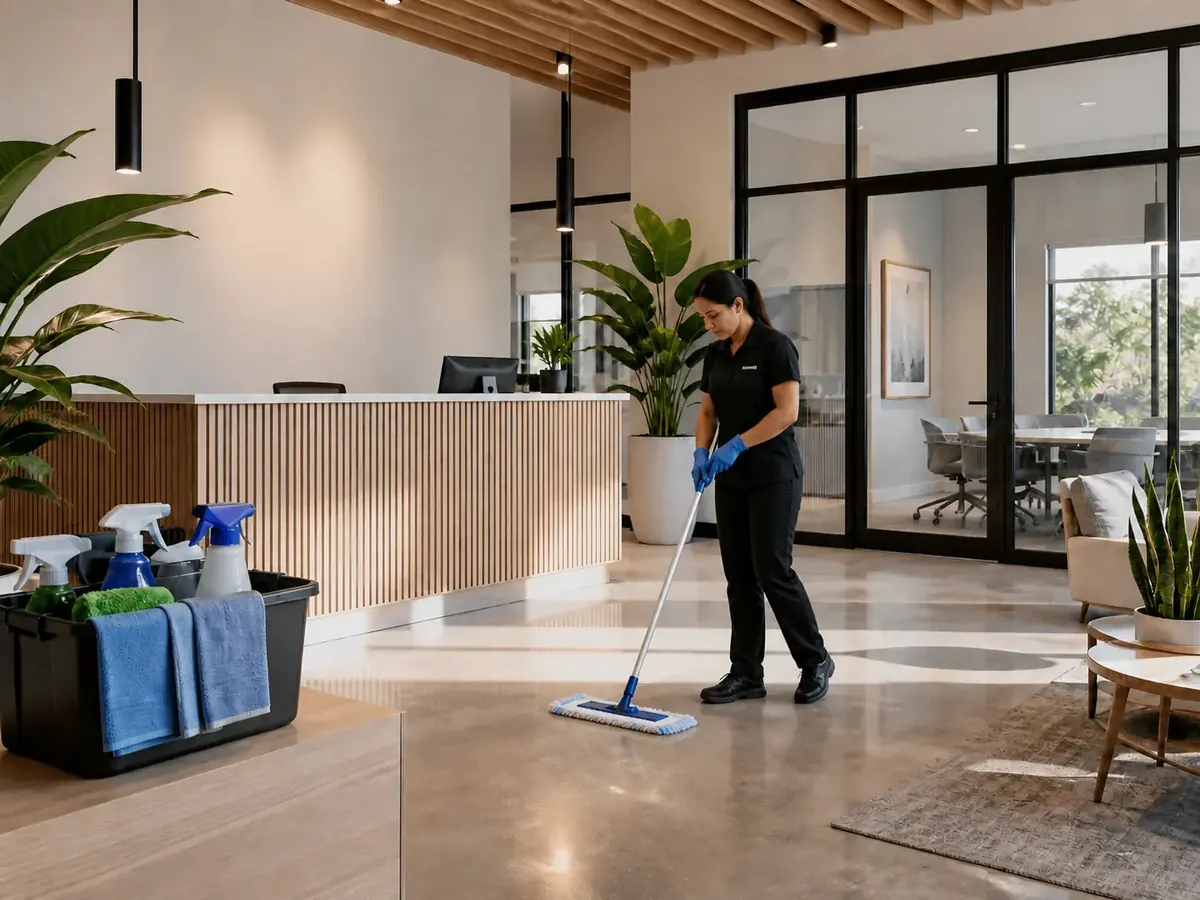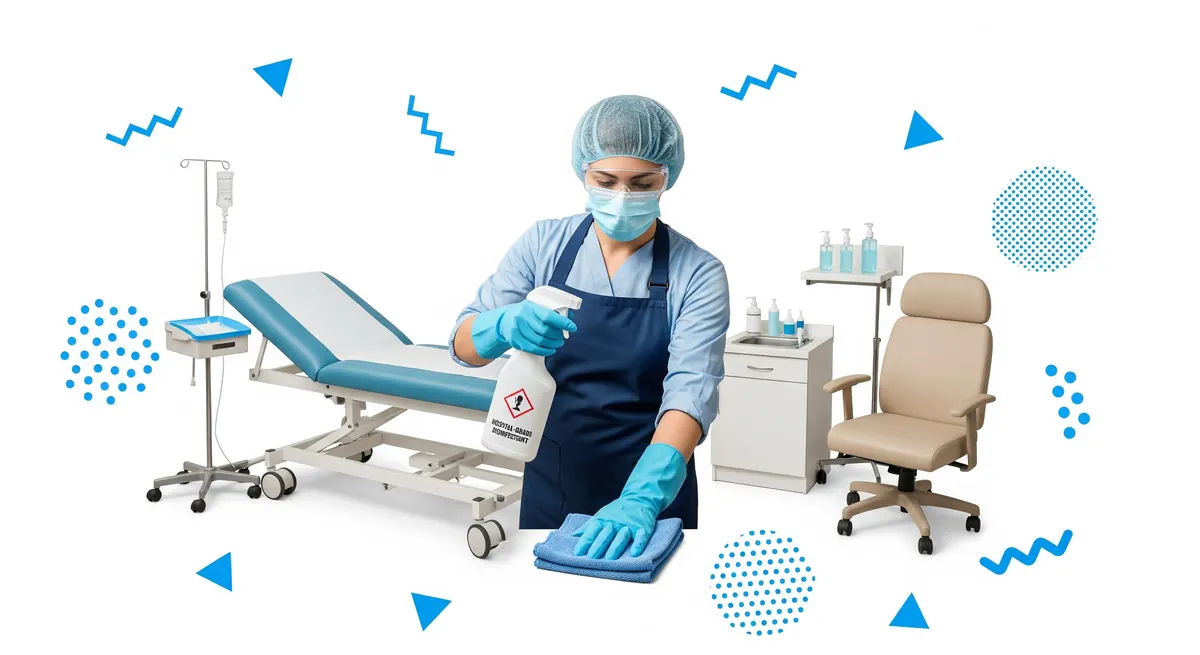
Cleaning a medical office is not cleaning an office that happens to have exam rooms in it.
The surfaces are different.
The risks are different.
And the standard your patients judge you by is a lot higher than the one they apply to a regular waiting area.
Most clinics find this out the hard way. They hire a general commercial cleaning company, the lobby looks fine, and then someone notices the same cloth being used in two exam rooms, or a disinfectant being wiped off before it has done anything at all.
If your cleaning company treats your clinic like an office suite, your clinic is not actually being disinfected.
Here is what medical office cleaning should look like, and what a clinic in Northern Indiana should expect from the company doing it.
1. Cleaning and Disinfecting Are Two Different Jobs
This is the distinction that matters most, and it is the one most people blur together.
Cleaning removes dirt and germs from a surface.
Disinfecting kills what is left behind.
You cannot skip the first step and go straight to the second. A disinfectant sprayed onto a soiled surface mostly works on the soil, not on the surface underneath it.
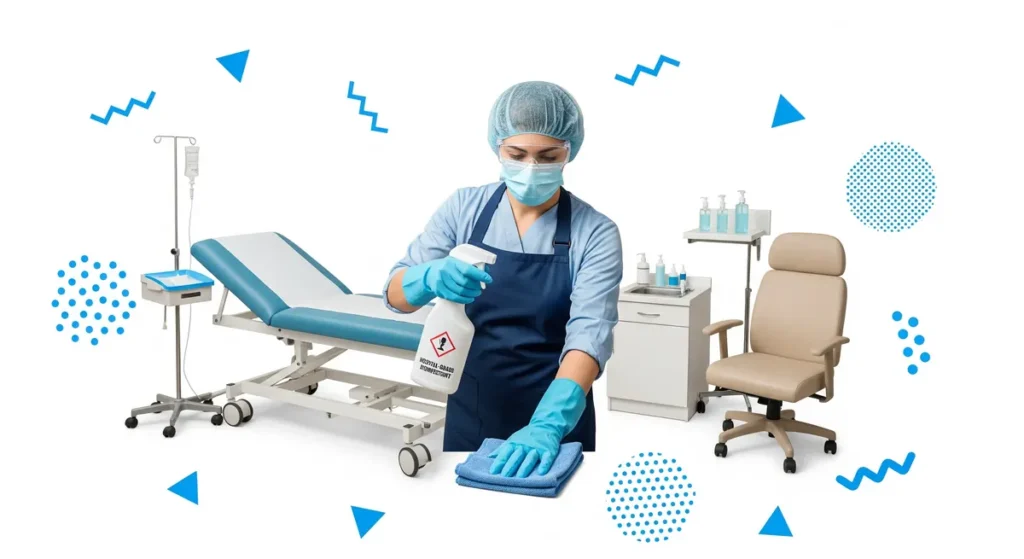
In a medical office, the sequence should be consistent:
- Clean the surface first to remove visible soil
- Apply an EPA-registered disinfectant appropriate for healthcare settings
- Leave it wet for the full contact time listed on the label
- Only then wipe or allow to air dry, according to the product directions
That third point is where most crews fall short.
Every disinfectant has a required dwell time, often several minutes. Spray and immediately wipe, and the product never gets the time it needs to work. The surface looks clean and is not disinfected.
If you want one question to ask a prospective cleaning company, make it this one: what is the contact time on the disinfectant your crew uses in exam rooms, and how do they make sure it is met?
2. Exam Rooms Need a Defined Routine, Not a Quick Pass
An exam room should be cleaned the same way every time, by someone who was trained on that routine.
At minimum, a nightly exam room routine usually covers:
- Exam table, including the base and any adjustment levers
- Counters, cabinet fronts and handles
- Sinks and faucet handles
- Light switches, door handles and door push plates
- Stools, chairs and armrests
- Computer stations, keyboards and monitor edges where allowed
- Trash, including replacing liners
- Floors, cleaned last
A few rules make the difference between a routine and a wipe-down.
Work from clean areas to dirty ones, and from high surfaces to low. Floors come last, always.
Use fresh cloths. Color-coded microfiber is the simplest way to keep restroom cloths out of exam rooms, and a crew that uses one bucket for the whole clinic is moving germs around rather than removing them.
Leave the medical waste alone. Sharps containers, red bag waste and anything regulated belongs to your clinical staff, not the cleaning crew. A cleaning company should know exactly where that line sits and stay on its side of it.
3. The Waiting Room Is Where Patients Form Their Opinion
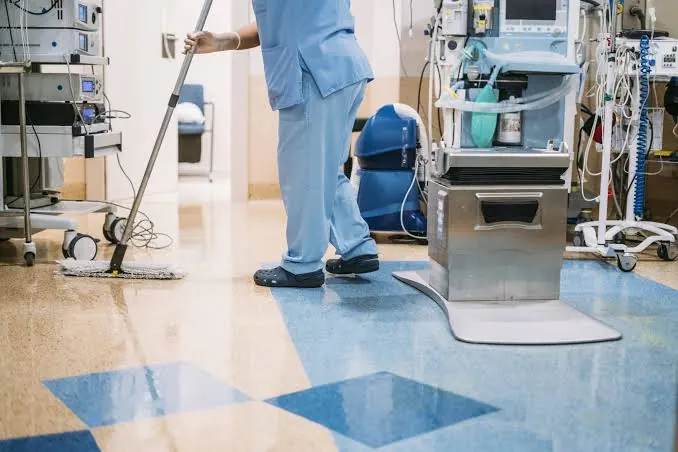
Exam rooms carry the infection risk. The waiting room carries the reputation.
It is also the one space in your building where sick people sit together for long stretches, touching the same chairs, pens and door handles.
What should be covered daily:
- Every chair, including arms, backs and the gaps between seats
- Check-in counter and the patient side of the glass
- Door handles, push plates and handrails
- Kiosks, tablets, clipboards and pens if your clinic uses them
- Children’s play areas, if you have one
- Water stations, vending machines and coffee areas
- Floors and entry mats, especially in winter
- Trash, emptied before it looks full
Fabric chairs deserve a mention. They hold odor and staining, they cannot be wiped down, and most clinics never budget for extracting them. If your waiting room furniture is upholstered, it needs a cleaning schedule of its own.
4. Restrooms Carry More Weight in a Clinic
Patients in a medical office use the restroom more than office workers do, often for samples, and often while unwell.
A clinic restroom should be cleaned and restocked every day the office is open, and checked more than once a day in a busy practice.
That means disinfecting the toilet and the flush handle, the sink, faucet and soap dispenser, the door handle inside and out, the baby changing station, and the grab bars. It means emptying trash and sanitary bins. It means the floor, including the base of the toilet, where odor actually comes from.
If your restrooms are the complaint you hear most often, the fix is usually frequency rather than effort. We covered how to think about that in how often your office should be cleaned.
5. High-Touch Surfaces Deserve Their Own List
In a clinic, germs travel on hands, and hands travel across a short list of surfaces all day long.
Those surfaces should be disinfected daily, and more often during respiratory season:
- Door handles and push plates throughout the building
- Light switches and thermostats
- Check-in counters and reception desks
- Handrails
- Shared phones, keyboards and mice
- Elevator buttons
- Chair arms in every room, not just the waiting area
- Vending and water station buttons
Ask your cleaning company for their high-touch list in writing. If they do not have one, the surfaces are being cleaned when someone remembers them.
Clinics that want a deeper layer here often add advanced disinfection services during flu season rather than relying on nightly wiping alone.
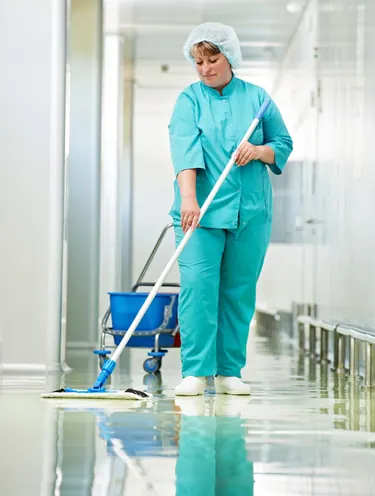
6. The Crew Matters as Much as the Checklist
In a medical office, who walks through the building after hours is part of the service.
A cleaning company serving clinics should be able to answer plainly:
- Are the same people cleaning our building each visit?
- Are they trained specifically on medical office cleaning, not just general janitorial work?
- Are they trained on bloodborne pathogen awareness and what they are not allowed to touch?
- Are background checks run on crew members?
- What happens when our regular cleaner is out?
- Who supervises and inspects the work?
Patient privacy is part of this too. Charts, screens and paperwork are in the rooms your crew is cleaning. A crew that understands a clinic knows not to move paperwork, not to photograph rooms and not to work on a computer station that is logged in.
High turnover is the warning sign. A new face every other week means the training, the routine and the familiarity with your building reset constantly, which is one of the warning signs worth watching.
7. Scheduling Around Patients Instead of Around the Crew
Most clinics are cleaned after the last patient leaves, which is the right call for exam rooms and restrooms.
But a practice that runs ten hours a day with a full waiting room usually needs something during the day as well.
Options worth discussing:
- A midday restroom and waiting room check
- Day porter coverage during peak patient hours
- Extra entry and floor attention during winter weather
- Faster turnaround when a room needs attention after a spill or an accident
Your cleaning plan should also say what happens on the days your schedule changes. Clinics have surgery days, vaccine clinics and half days, and the cleaning plan should bend around them rather than ignoring them.
So, What Should a Medical Office Expect?
Here is the short version.
Every day the clinic is open:
Exam rooms cleaned and disinfected with full contact time, restrooms cleaned and restocked, waiting room and high-touch surfaces disinfected, trash removed, floors cleaned.
Weekly:
Detailed dusting, interior glass, baseboards, more thorough floor care, and attention to rooms that get lighter daily use.
Monthly:
Vents and high surfaces, cabinet fronts, doors and frames, and a documented inspection of the whole facility.
Quarterly or seasonally:
Hard floor scrubbing and refinishing, carpet and upholstery extraction, and an added disinfection layer heading into respiratory season.
Always:
A consistent trained crew, written scope, a quality control process that does not depend on you noticing problems, and a clear line between janitorial work and regulated medical waste.
Questions to Ask Before You Sign With a Cleaning Company
Before a clinic signs anything, these are worth asking:
- What disinfectant do you use in exam rooms, and what is its contact time?
- How do you prevent cross contamination between rooms?
- Do you use color-coded microfiber, and how often are cloths changed?
- Have your crews been trained on medical office cleaning specifically?
- What will your crew never touch in our building?
- Who inspects the work, and how often?
- Will we have the same cleaners each visit?
- How do you handle patient privacy in exam rooms and at workstations?
- Can we see the scope of work in writing before we sign?
If the answers are vague, the cleaning will be too. A company that cleans clinics regularly will not hesitate on any of these.
For a wider view of what any cleaning agreement should include, it helps to read what tasks commercial cleaning covers before you compare providers.
Looking for a Cleaning Company That Understands Clinics?
At Club Clean, we clean medical offices the way medical offices need to be cleaned. Trained crews, a defined routine for exam rooms, real contact time on disinfectants, color-coded supplies and a clear line around anything regulated.
We also build the schedule around your patient hours instead of ours.
If you run a practice in Michigan City, Valparaiso or La Porte, we would be glad to walk your facility, look at your rooms and show you exactly what we would recommend. You can also see more about our medical facility cleaning services.
Request a free medical office cleaning quote from Club Clean today.